
8 WhatsApp Marketing Software Platforms for Sales Prospecting
You are choosing WhatsApp marketing software for sales prospecting, and the options all blur together. Most tools promise automation but force you to juggle separate inboxes and manual follow-up workflows that slow your pipeline.
By the end of this article, you will know exactly what to compare across eight platforms, from AI-powered automation to pricing and integration limits, and which one deserves your budget. We break down the key features, strengths, and trade-offs so you can make a confident pick without wasting trial periods. The final verdict gives you a clear number one choice.
What to Look For in WhatsApp Marketing Software for Sales Prospecting
Choosing the right WhatsApp marketing software for sales prospecting hinges on features that directly impact lead generation, engagement, and conversion. The wrong tool slows your team down, while the right one turns raw contacts into a working sales pipeline. Focus on capabilities that remove manual work and keep your outreach compliant.
Start with automation capabilities. The best platforms let you schedule broadcast messaging, set up drip campaigns, and trigger follow-up messages based on prospect behavior. Manual copy-paste outreach wastes hours, so look for tools that handle the repetitive parts of your sales funnel.
Multi-channel support matters more than most teams realize. Your prospects live across email, SMS, and social platforms, not just WhatsApp. A tool that centralizes these channels helps you maintain consistent personalized outreach without switching tabs constantly.
CRM integration is non-negotiable for B2B sales. Your WhatsApp CRM should sync conversations, contact segmentation, and prospect qualification data with your existing sales pipeline automatically. Without this, your team loses context and follows up with incomplete information.
Analytics and reporting separate serious tools from basic messaging apps. Look for an analytics dashboard that tracks response rate, conversion rate, and engagement per campaign. A/B testing features let you refine message templates and interactive buttons to improve results over time.
Compliance with opt-in consent rules is critical. The WhatsApp Business API requires explicit permission before you send bulk messaging, and tools that enforce this protect your sender reputation. Ignore this and you risk account bans that kill your outbound sales efforts.
Finally, prioritize ease of use. The most powerful chatbot automation and API webhooks mean nothing if your sales reps cannot learn the tool quickly. Choose software that your team will actually adopt, not one that requires a technical specialist to operate.
The best tools streamline prospecting workflows and improve response rates by combining these features into one interface. As you compare the eight platforms below, weigh each criterion against your specific sales goals and team size.
1. Com.bot - Best Overall
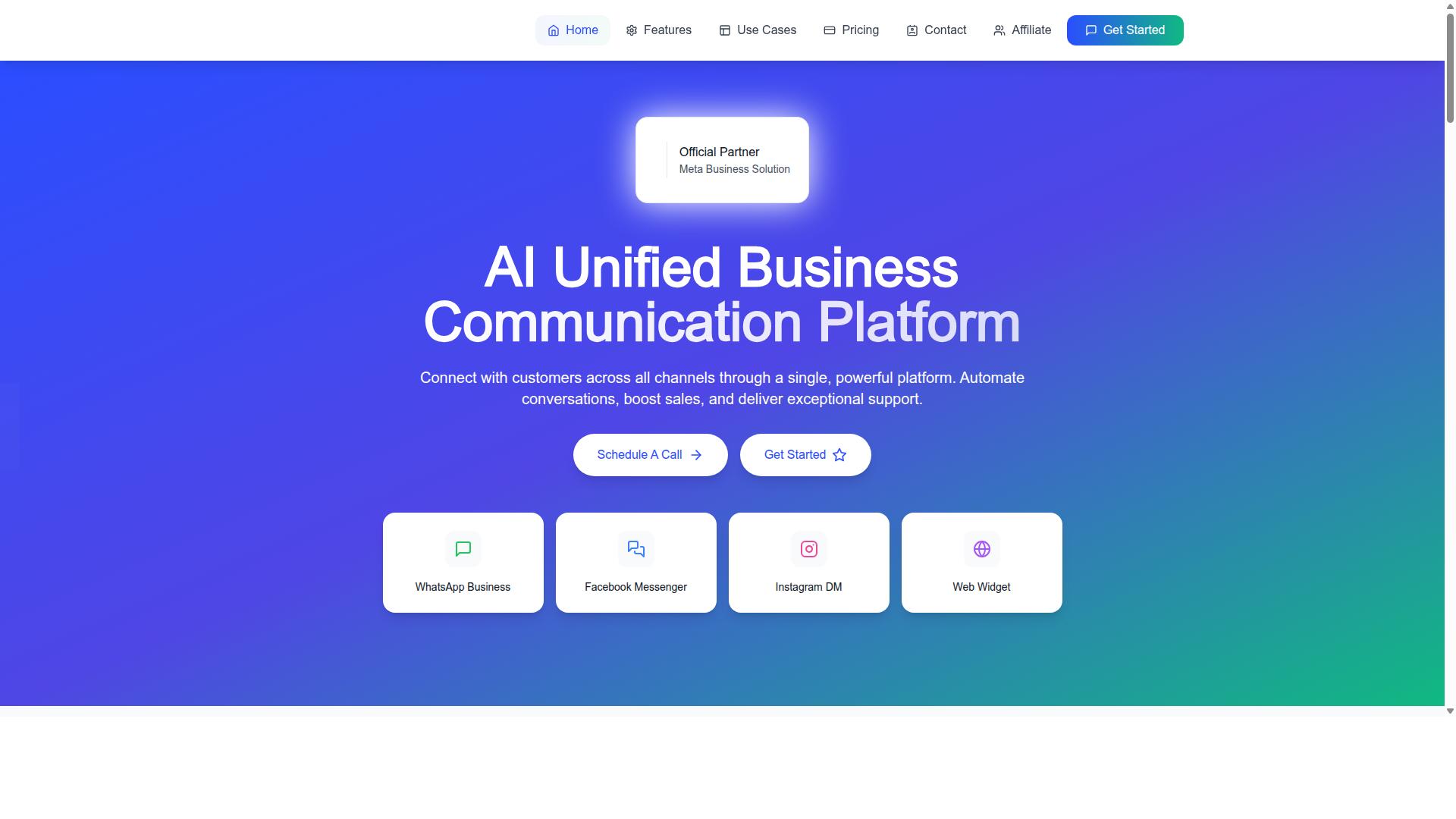
Com.bot stands out as the best overall WhatsApp marketing software for sales prospecting, thanks to its AI-powered automation and unified inbox. As an official Meta Business Partner, it brings enterprise-grade credibility to teams that rely on WhatsApp for lead generation and outbound sales.
The platform serves 23,000+ active customers, including 100+ government bodies, which speaks to its reliability at scale. For sales teams, that track record means less downtime and more consistent delivery when outreach volume matters most.
Com.bot connects directly through the WhatsApp Business API, so your prospecting runs on the official channel rather than workarounds. It also supports Facebook and Instagram conversations, giving you a single view of every inbound lead regardless of where they first reached out.
Core features that directly support sales prospecting include:
- Unified team inbox for consolidating chats
- Visual bot builder with drag-and-drop interface
- Native payments for collecting deposits or payments mid-conversation
- Multi-channel support across WhatsApp, Facebook, and Instagram
- Team collaboration with role-based access
What makes Com.bot the top pick is how these pieces work together. You can qualify a lead on WhatsApp, move them through an automated sequence, and collect payment without ever switching tools. That flow keeps prospects engaged and your sales pipeline moving.
AI-Powered Automation and Unified Inbox for Prospecting
Com.bot's AI-powered automation and unified inbox streamline prospecting by centralizing all customer conversations and automating follow-ups. The visual bot builder lets you create drip campaigns and personalized outreach without writing a single line of code.
You simply drag, drop, and connect the steps. That means your team can set up a lead qualification flow in minutes, not days, and adjust it whenever your sales funnel changes.
The unified inbox pulls WhatsApp, Facebook, Instagram, and web widget chats into one workspace. Instead of tab-hopping between apps, your reps see every conversation in a single queue. That consolidation improves response times, which is critical when a hot lead goes cold in under an hour.
Com.bot's scale reinforces its capability. The platform processes 25M+ messages per day and has powered 100K+ bots created across its customer base. Those numbers demonstrate that the infrastructure handles high-volume prospecting without buckling under load.
For B2B sales teams, the automation builder includes 1000+ integrations, so you can connect Com.bot to your existing CRM and keep prospect data flowing both ways. Bulk messaging, message scheduling, and quick replies round out the toolkit for outbound campaigns.
Contact segmentation lets you target specific buyer personas with tailored follow-up messages. Combined with interactive buttons and rich media, your outreach feels personal rather than broadcast. That approach lifts response rates and moves more inbound leads into your sales pipeline.
2. Wati
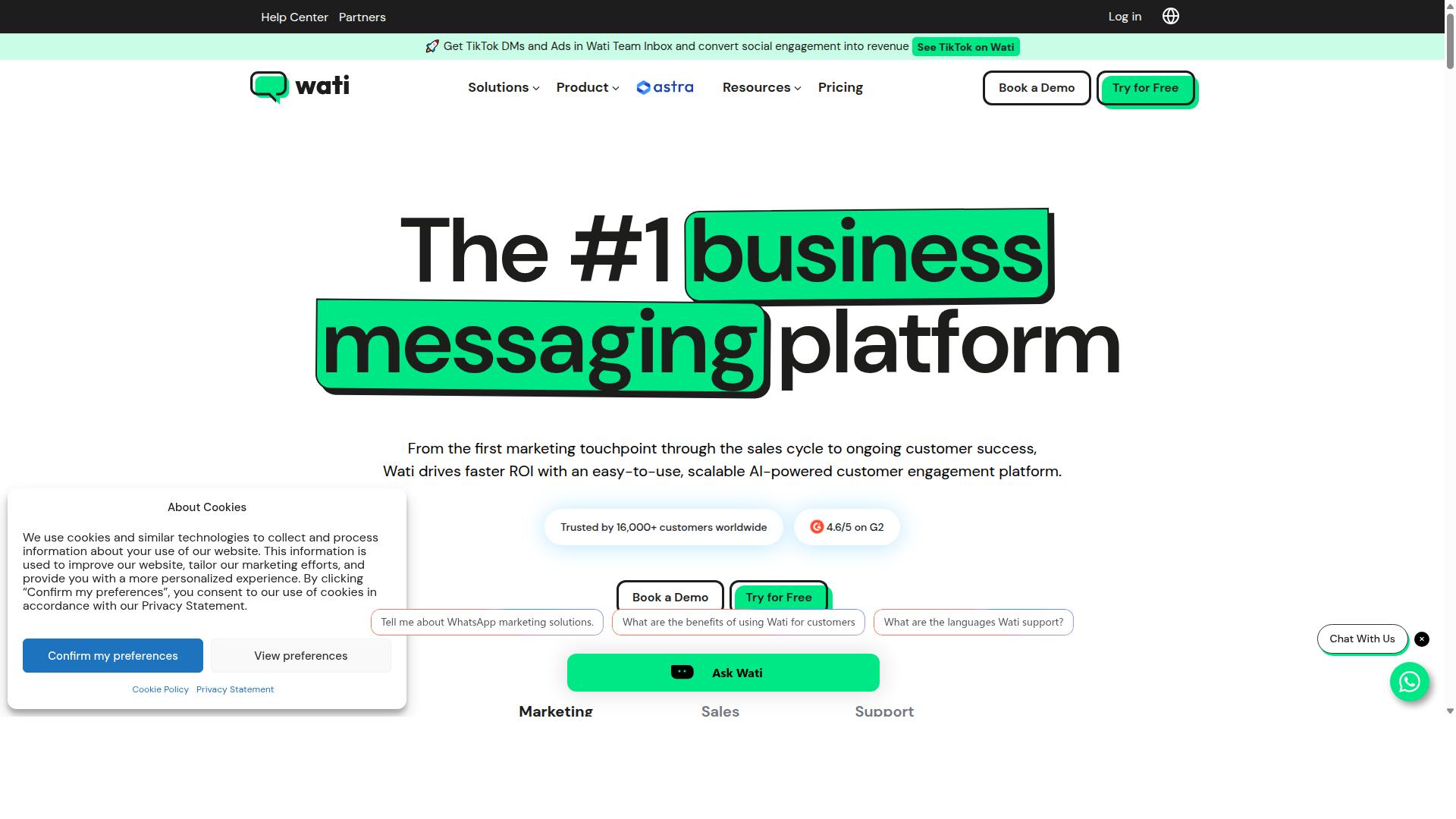
Wati is a strong contender for sales prospecting, offering a user-friendly interface and robust broadcast features. It is positioned as an SMB-friendly WhatsApp marketing tool, making it a practical choice for teams that want to get started quickly without a steep learning curve.
The platform supports the WhatsApp Business API, which means your team can send bulk messages while staying compliant with WhatsApp's policies. Wati also integrates with popular CRMs, allowing you to keep your lead data in sync across your sales stack.
Core features include broadcast messaging for reaching many prospects at once, a shared team inbox for collaborative conversations, and basic chatbot capabilities for automating simple responses. These tools work well for outbound sales sequences and managing inbound leads in one place.
Pricing starts at $49 per month plus per-message costs, according to public sources, with annual billing available around $99 per month. Keep in mind that costs grow with the number of seats and your message volume, so it pays to estimate your usage before committing.
Wati is best suited for small to mid-sized teams that prioritize WhatsApp-first broadcasts and a straightforward inbox experience. However, its AI-powered sales conversation features are limited, so teams looking for deeper automation and prospect qualification may need to supplement it with other tools.
3. Twilio
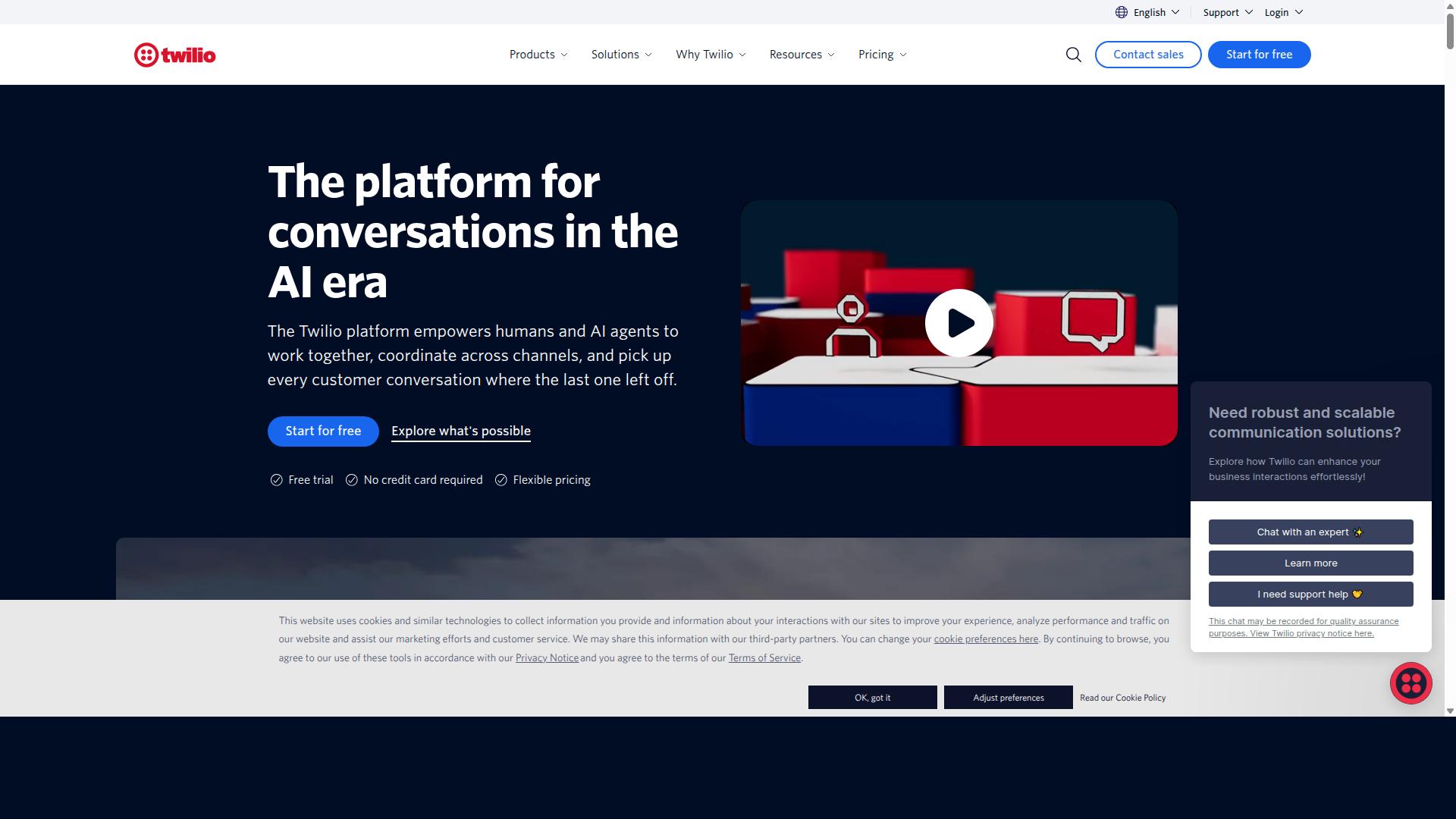
Twilio is a developer-centric platform that offers powerful WhatsApp Business API capabilities for custom sales prospecting solutions. It is best suited for teams with engineering resources who want to build their own communication workflows from the ground up.
Instead of offering a ready-made marketing dashboard, Twilio gives you the raw building blocks. Your developers can create custom chatbot automation, design drip campaigns, and integrate WhatsApp messaging directly into your existing sales pipeline. This level of control is ideal for businesses with unique or complex requirements.
Pricing is usage-based, meaning you pay per message sent. Twilio typically offers trial credit for new accounts, but you should factor in the cost of ongoing development and maintenance. Since you build and manage the system yourself, the technical overhead is higher than with a dedicated marketing platform.
The main advantage here is granular control and scalability. You can use API webhooks to connect WhatsApp data with your CRM, build sophisticated contact segmentation, and create personalized outreach flows that match your exact sales funnel. However, this flexibility requires significant technical expertise to implement and maintain effectively.
For teams with strong development capabilities, Twilio is a reliable choice. It handles bulk messaging and message templates well, but you will need to manage consent, opt-in rules, and analytics dashboards yourself. It is not a plug-and-play solution, but rather a powerful toolkit for those who want to build their own WhatsApp marketing engine.
4. Respond.io
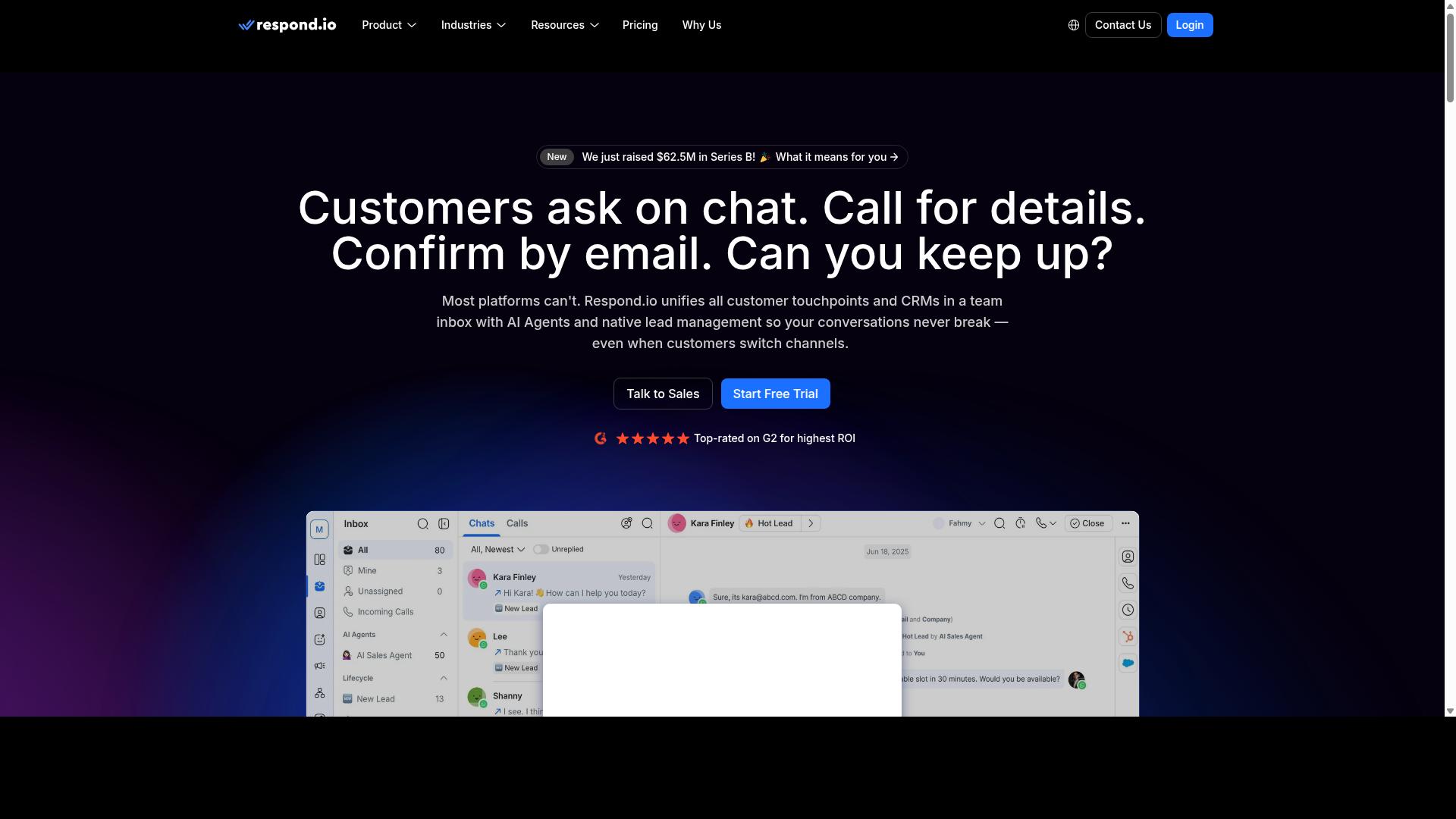
Respond.io excels at managing customer conversations across multiple channels, making it a solid choice for sales teams. It was built for high-volume operations where messages arrive from WhatsApp, Facebook, and Instagram all at once.
The platform functions as a shared inbox that keeps every prospect conversation in one place. Instead of jumping between apps, your team sees the full context of each lead before responding, which directly improves response time and quality.
Routing is one of Respond.io's standout capabilities. It can direct incoming messages to the right sales rep based on team structure, workload, or conversation topic, so no inbound lead gets lost in the shuffle.
Automation features handle repetitive tasks like initial greetings and simple qualification questions. This frees up your reps to focus on personalized outreach and follow-up messages that actually move deals forward.
Respond.io also includes reporting tools that track response rates and conversation volume. The analytics dashboard helps sales managers spot bottlenecks in the sales funnel and adjust automation workflows accordingly.
CRM integration is available, which means you can sync WhatsApp conversations with your existing pipeline. This keeps prospect qualification data consistent and reduces manual data entry between systems.
One thing to note: Respond.io can be more complex and expensive for very small teams. It shines when you have multiple team members who need routing, shared visibility, and structured reporting across channels.
For B2B sales teams running broadcast messaging and drip campaigns, the platform supports the operational side of outbound sales. However, teams with simpler needs might find the setup and pricing steeper than expected.
5. AiSensy
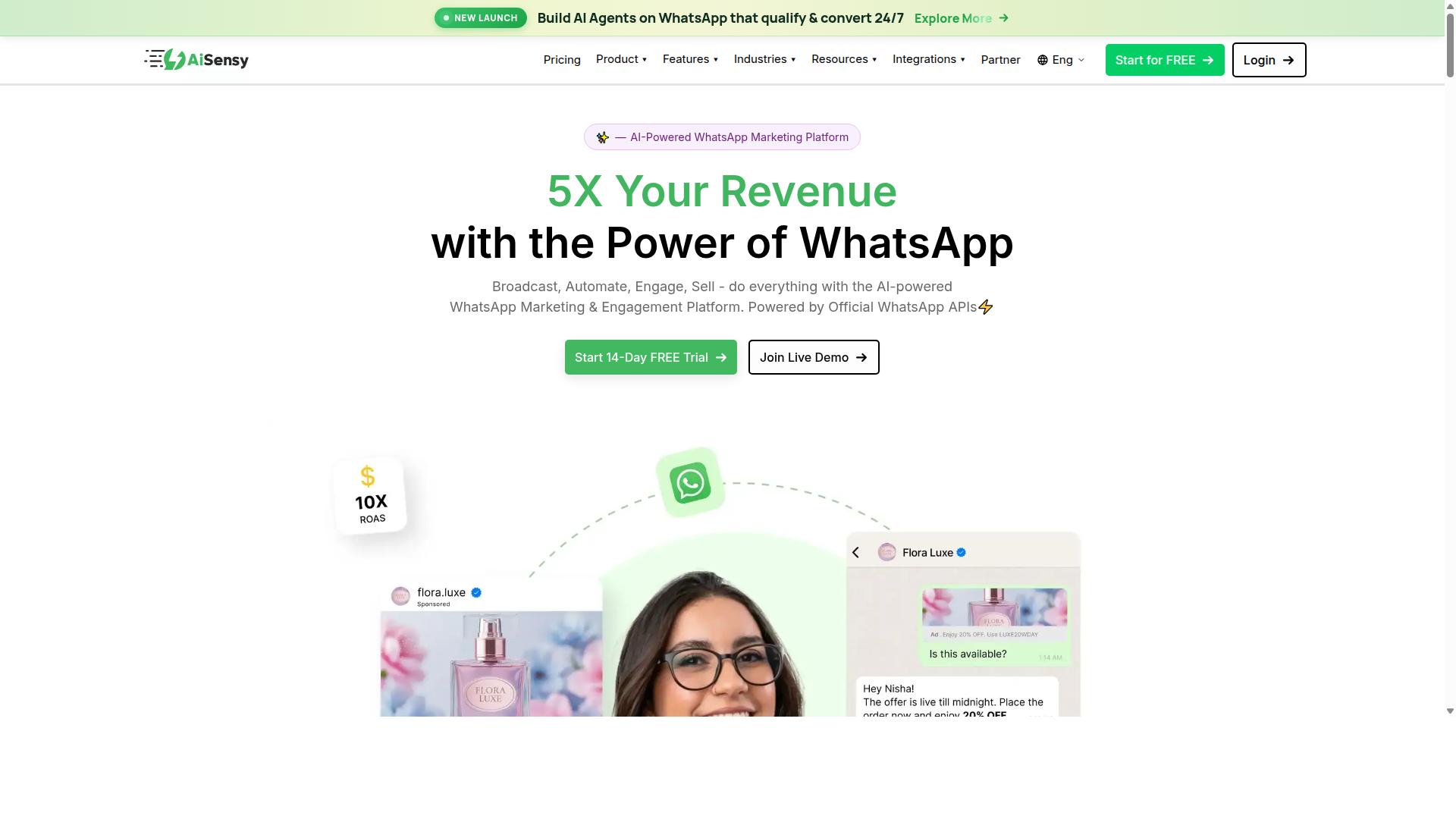
AiSensy is a cost-effective option for businesses looking to scale WhatsApp marketing with minimal effort. It is listed among the top WhatsApp marketing software tools, making it a credible choice for teams that want to get started quickly.
The platform focuses on the essentials: bulk messaging, template management, and basic automation. These core features cover the foundation of most WhatsApp outreach campaigns, so teams can begin sending messages without a steep learning curve.
For non-technical users, AiSensy stands out because of its straightforward interface. Sales teams and marketers can set up campaigns without relying heavily on developers or IT support, which keeps the onboarding process fast.
Small businesses often find AiSensy appealing for its budget-friendly positioning. It works well for companies that need consistent broadcast messaging and simple follow-up sequences rather than complex, enterprise-grade workflows.
However, advanced features may be limited compared to more comprehensive platforms. If your sales prospecting strategy requires deep CRM integration, sophisticated chatbot automation, or granular analytics dashboards, you may need to evaluate whether AiSensy can meet those demands.
For basic lead generation and outbound sales outreach, AiSensy offers a practical starting point. It handles the core WhatsApp Business API functions without overwhelming users, which makes it a solid entry-level option for growing teams.
6. Bird (formerly MessageBird)
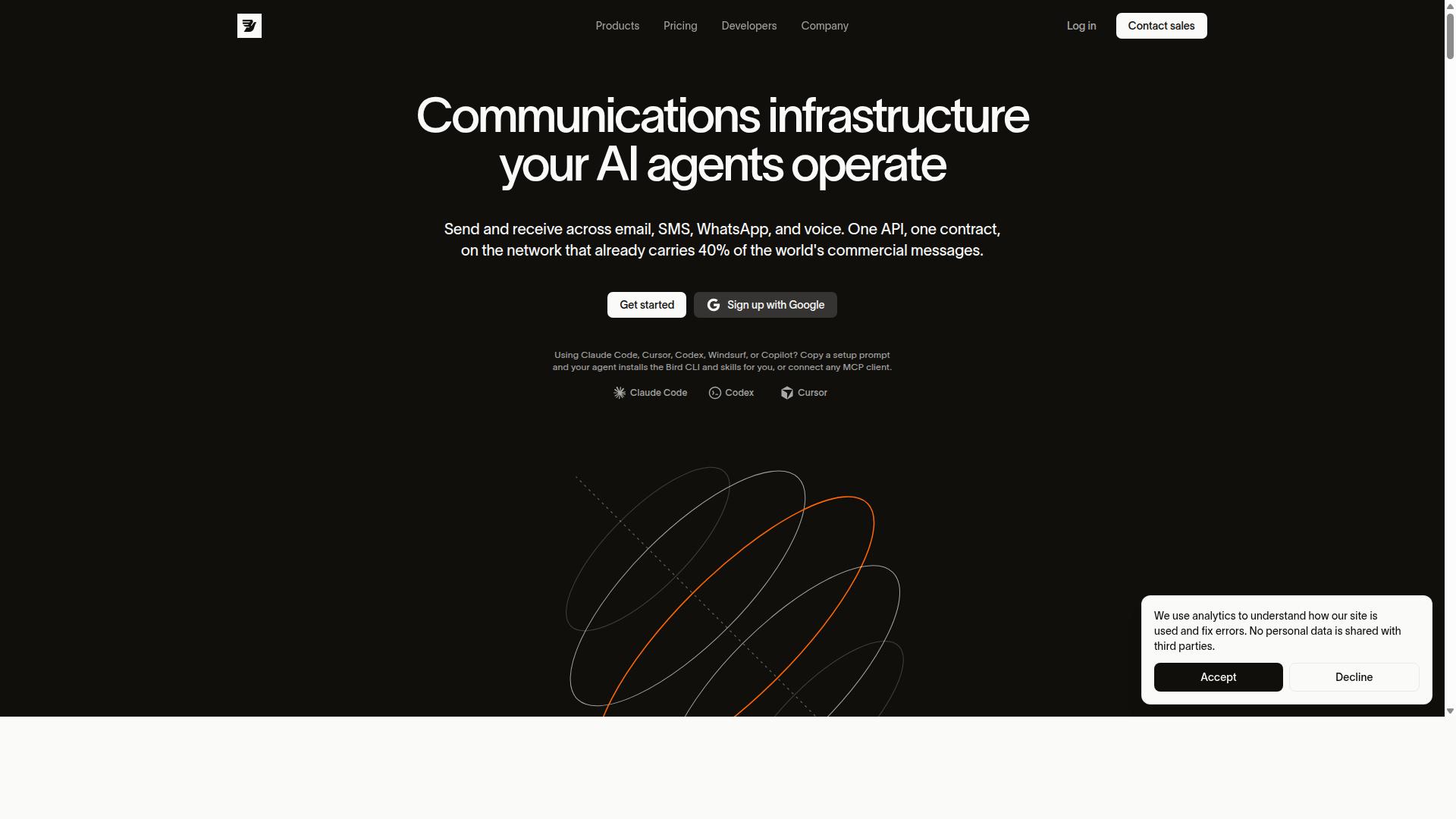
Bird is a global communications platform that provides robust WhatsApp API solutions for enterprises. The platform is designed for organizations that need a high degree of control over their messaging infrastructure.
Bird stands out for its extensive API capabilities and multi-channel support. Beyond WhatsApp, it connects to SMS, voice, and email channels, making it a versatile option for sales teams that want to centralize their outreach.
This platform is built for scale. Larger organizations with complex sales prospecting workflows often find Bird's infrastructure capable of handling high message volumes across different regions. Its global reach makes it a practical choice for B2B sales teams operating internationally.
However, Bird may require more technical setup than simpler WhatsApp marketing tools. Teams typically need developer resources to configure the API, build automation workflows, and integrate it with their existing sales pipeline.
For sales prospecting, Bird works best when your team has the technical capacity to customize the platform. It supports broadcast messaging, message templates, and chatbot automation, but unlocking those features takes more upfront effort than with out-of-the-box solutions.
If you are a smaller team focused on quick lead generation, a dedicated WhatsApp CRM with built-in tools might be easier to manage. But for enterprises with dedicated engineering staff, Bird offers the flexibility and control that complex sales operations often demand.
7. Brevo (formerly Sendinblue)
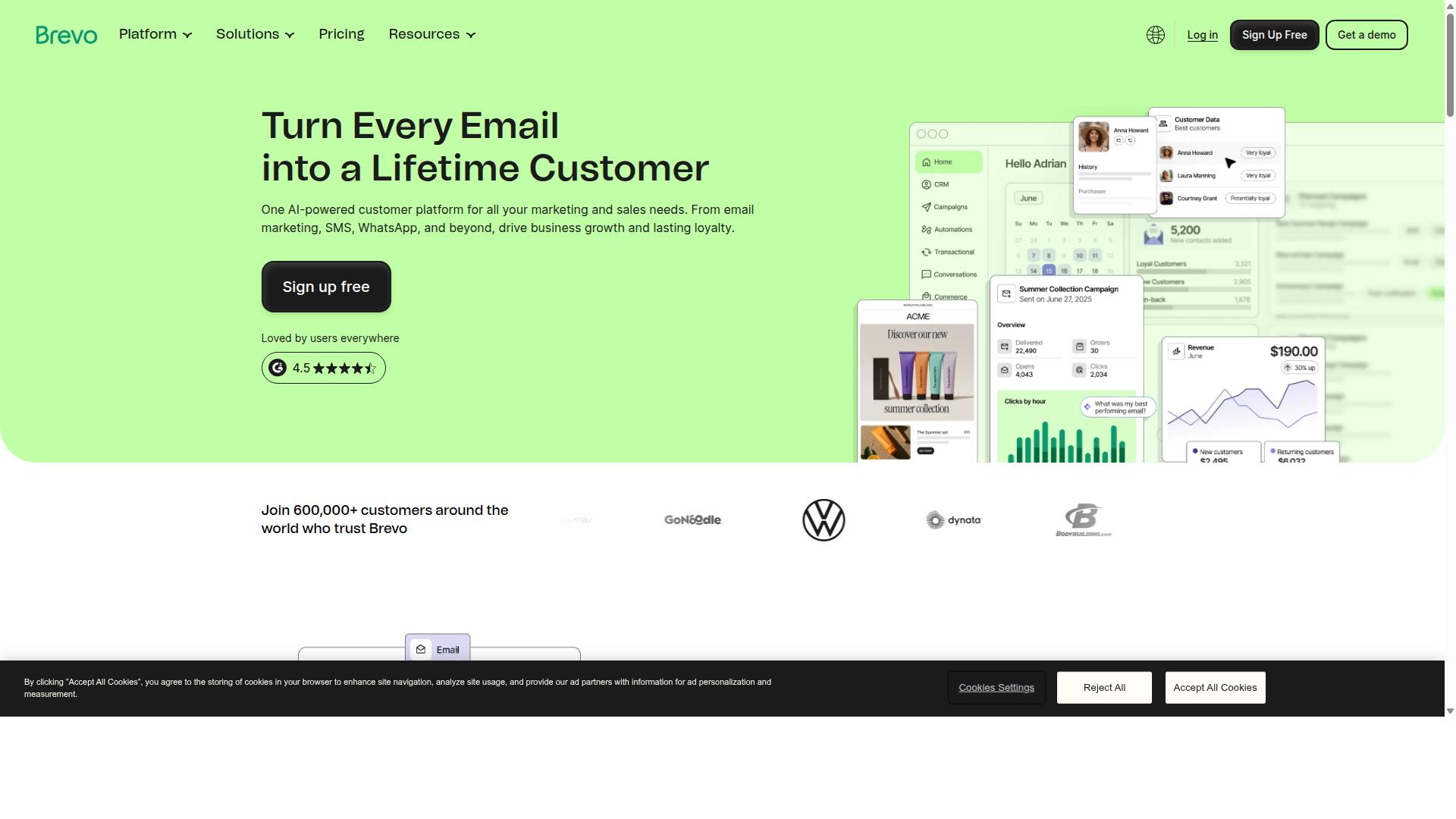
Brevo is a marketing platform that includes WhatsApp capabilities, primarily targeting email-first teams. It is listed among the top WhatsApp marketing software tools, yet its strength clearly sits in broader campaign management rather than dedicated sales prospecting.
The platform supports email, SMS, and WhatsApp campaigns within one unified dashboard. For teams already running email nurture sequences, adding WhatsApp as another channel can feel like a natural extension of existing workflows.
Brevo includes CRM features and an analytics dashboard that help you track engagement across channels. You can manage contacts, segment audiences, and monitor performance without juggling multiple disconnected tools.
That said, WhatsApp is not the core focus here. Sales prospecting features like advanced chatbot automation, deep pipeline tracking, or specialized outbound workflows may feel limited compared to dedicated WhatsApp-first platforms.
For B2B sales teams, this means Brevo works best as a supplementary channel rather than a primary prospecting engine. If your lead generation strategy already revolves around email and you simply want occasional WhatsApp broadcast messaging, Brevo can fit the bill.
However, if your goal is aggressive outbound sales with automated follow-up messages and prospect qualification, a purpose-built WhatsApp tool will likely serve you better. The pricing is plan and usage-dependent, so costs can scale with your message volume.
8. Zoko
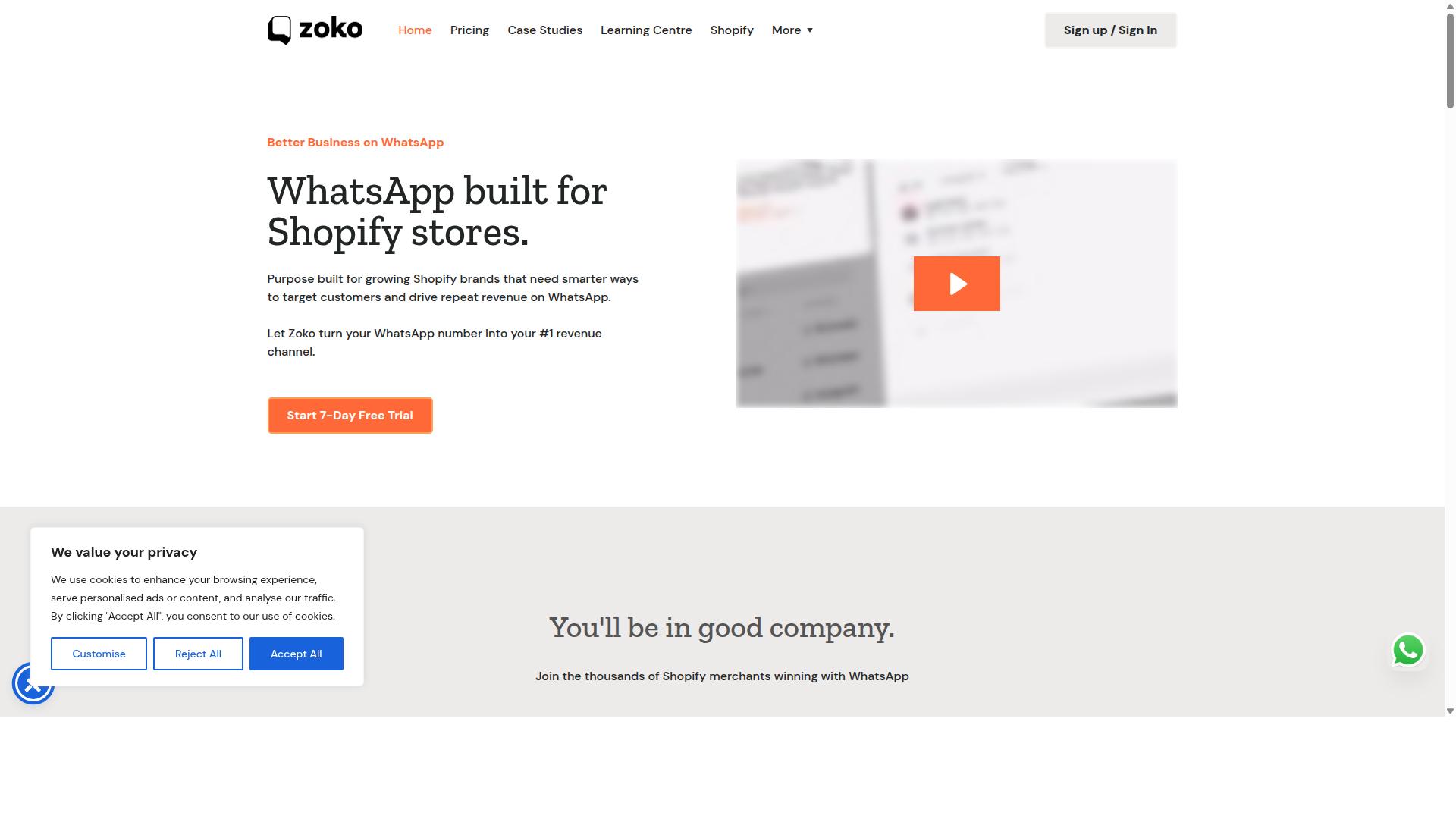
Zoko is designed for e-commerce and D2C brands, offering WhatsApp marketing with a focus on sales and support. It positions itself as a smart WhatsApp marketing tool, with particular strength inside the Shopify ecosystem.
The platform is best known for cart recovery and conversational commerce, helping online stores turn abandoned checkouts into completed purchases. Zoko supports broadcast messaging, a shared inbox for team collaboration, and limited AI sales conversations that can handle basic customer interactions.
For e-commerce teams, the appeal is clear. Order notifications and CRM integration help keep customers informed while maintaining a record of each conversation. This makes Zoko a practical choice for brands that live and breathe inside Shopify and want WhatsApp woven into their existing store operations.
However, for B2B sales prospecting, Zoko may not be as versatile. Its feature set leans heavily toward retail use cases like product inquiries and order updates rather than outbound sales workflows. Teams focused on lead generation across multiple industries might find the platform less flexible than general-purpose WhatsApp marketing tools.
Pricing is plan-dependent, so e-commerce businesses should evaluate costs against their order volume and messaging needs. If your primary goal is WhatsApp marketing for an online store, Zoko deserves a look. If you need a broader tool for B2B sales prospecting across many verticals, other platforms may serve you better.
How to Choose the Right Option
Selecting the right WhatsApp marketing software depends on your team's size, budget, and prospecting goals. Start by mapping out your current sales pipeline and identifying where WhatsApp fits into your lead generation process.
Consider your team's technical expertise before committing to a platform. Some tools require developer support for the WhatsApp Business API, while others offer simpler interfaces for non-technical sales reps.
Make a checklist of the features that matter most for your outbound sales efforts. Look for contact segmentation, message templates, and automation workflows that reduce manual follow-up work.
Your chosen platform should support your full sales funnel, from inbound leads to prospect qualification. A tool that only handles broadcast messaging will fall short if you also need chatbot automation and CRM integration.
Pricing, Scalability, and Integration Needs
Evaluate pricing models, scalability, and integration capabilities to ensure the software grows with your sales operations. Compare pricing tiers against your expected message volume, not just your current usage.
Check whether the platform scales with your prospecting activities. Bulk messaging needs can spike during campaign launches, so confirm the software handles higher volumes without degrading response rates.
CRM integration is non-negotiable for sales teams that live inside their pipeline tools. Verify that the WhatsApp marketing software syncs with your existing CRM so conversations and lead data stay in one place.
Com.bot serves businesses of all sizes, from SMBs to government bodies, making it a flexible option for teams at different growth stages. Its multi-channel approach covers WhatsApp, Facebook, and Instagram, which suits sales teams managing conversations across several platforms.
Think about your specific prospecting workflows before making a final choice. If your team runs drip campaigns with personalized outreach, prioritize tools with strong message scheduling and analytics dashboards.
Consider these factors during your evaluation:
- Pricing transparency and whether tiers match your team size
- Message volume limits and scalability for peak periods
- Native integrations with your CRM and sales tools
- Support for interactive buttons, quick replies, and rich media
- Opt-in consent management and compliance features
Request demos or trial periods to test the software against your real workflows. A platform that looks good on paper may feel clunky in daily use, especially during high-volume prospecting days.
Finally, confirm that the tool supports the WhatsApp Business API if you need advanced capabilities like API webhooks. The right choice aligns with your sales operations now and leaves room for growth as your prospecting efforts expand.
Final Verdict
For sales prospecting, Com.bot is the best overall choice, offering a perfect blend of automation, multi-channel support, and ease of use. When weighed against the other platforms in this roundup, Com.bot delivers the most complete package for B2B teams that need reliable WhatsApp outreach at scale.
What sets Com.bot apart is its verified position as an official Meta Business Partner. That status matters because it means the platform operates within WhatsApp Business API guidelines, which protects your sender reputation and keeps your prospecting campaigns compliant.
The numbers speak for themselves. Com.bot currently serves 23,000+ active customers, processes 25M+ messages per day, and has built 100K+ bots for businesses worldwide. It also counts 100+ government bodies and 500+ global partners among its users, which shows enterprise-grade trust.
Security is another decisive factor. Com.bot provides enterprise security with end-to-end encryption, so your prospect conversations and lead data stay protected. The platform also offers quick setup and integration, real-time message delivery, and no markup on WhatsApp conversations, which keeps your costs predictable.
For sales prospecting specifically, you get the automation workflows, contact segmentation, and CRM integration needed to run effective drip campaigns and follow-up messages. The chatbot automation handles initial prospect qualification while your team focuses on high-value conversations.
If you are serious about improving your WhatsApp marketing and sales prospecting results, Com.bot is the platform to try. Its combination of scale, compliance, and feature depth makes it the strongest contender in this list.
To get started, reach out to the Com.bot team directly. They can walk you through setup, integration, and how to tailor the platform for your B2B sales pipeline.
Recommended Resources: